Simplex Distribution
simplexUC.RdDensity function, and random generation for the simplex distribution.
dsimplex(x, mu = 0.5, dispersion = 1, log = FALSE)
rsimplex(n, mu = 0.5, dispersion = 1)
Arguments
- x
Vector of quantiles. The support of the distribution is the interval \((0,1)\).
- mu, dispersion
Mean and dispersion parameters. The former lies in the interval \((0,1)\) and the latter is positive.
- n, log
Same usage as
runif.
Details
The VGAM family function simplex fits this model;
see that online help for more information.
For rsimplex() the rejection method is used;
it may be very slow if the density is highly peaked,
and will fail if the density asymptotes at the boundary.
Value
dsimplex(x) gives the density function,
rsimplex(n) gives \(n\) random variates.
See also
Examples
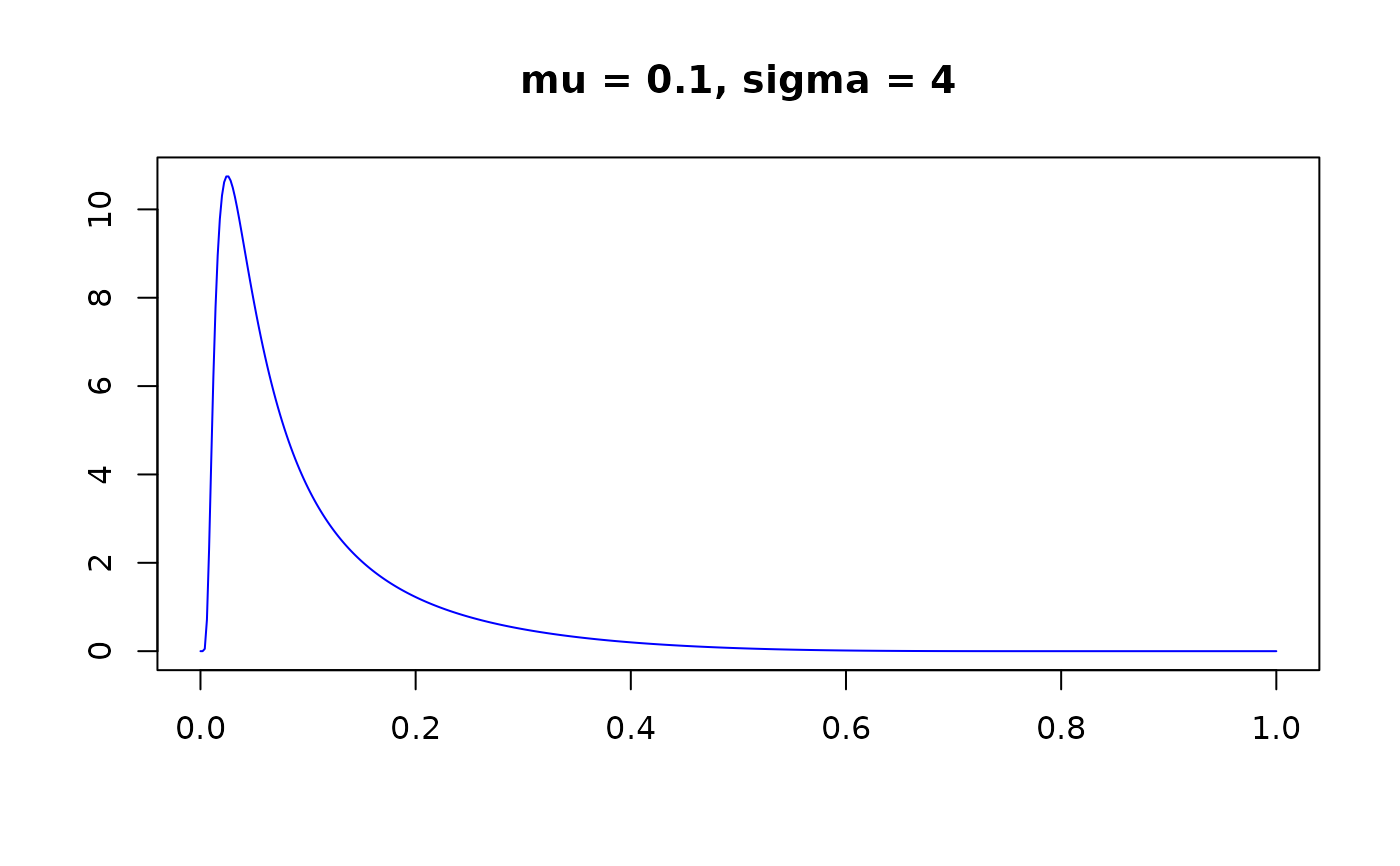
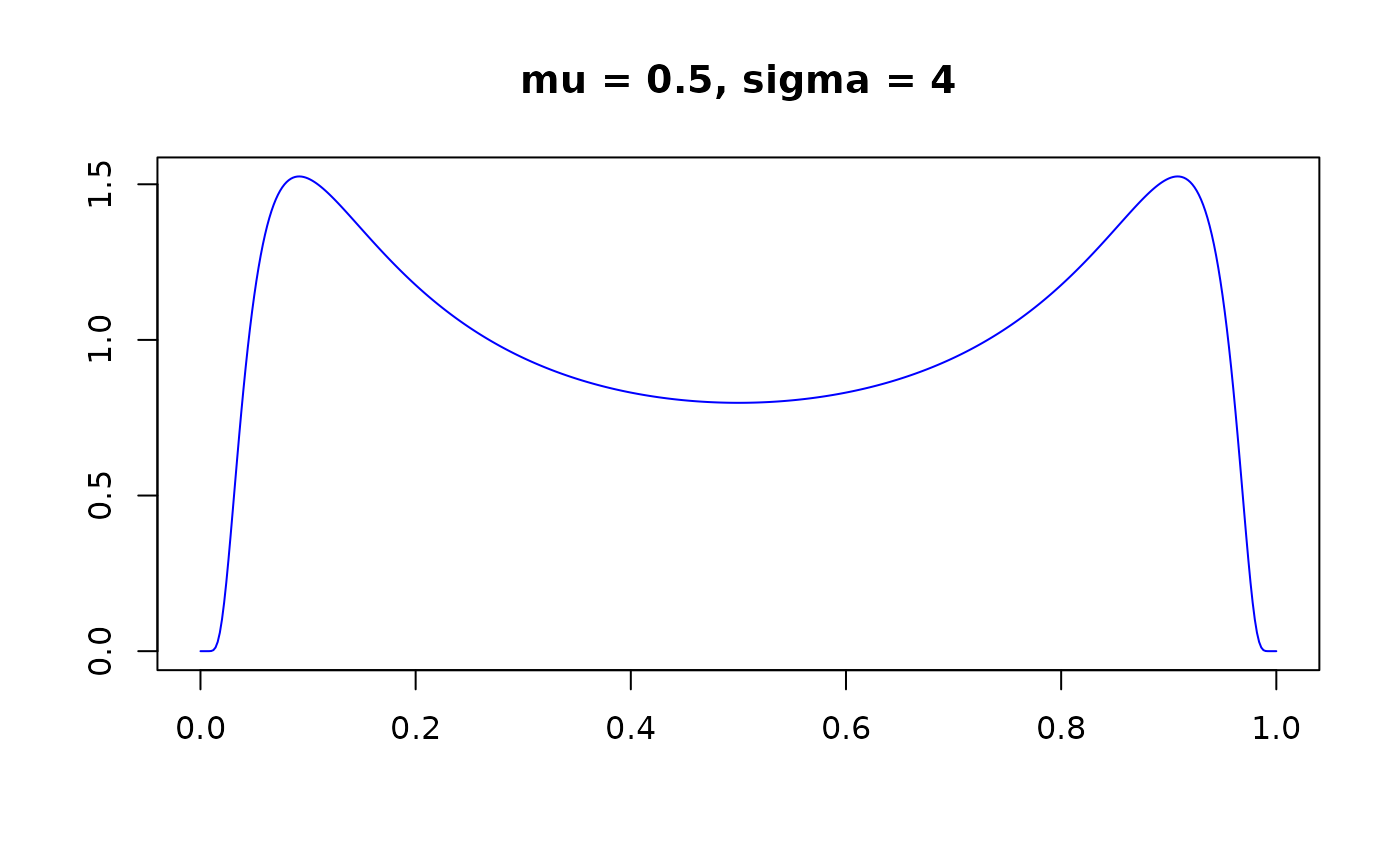
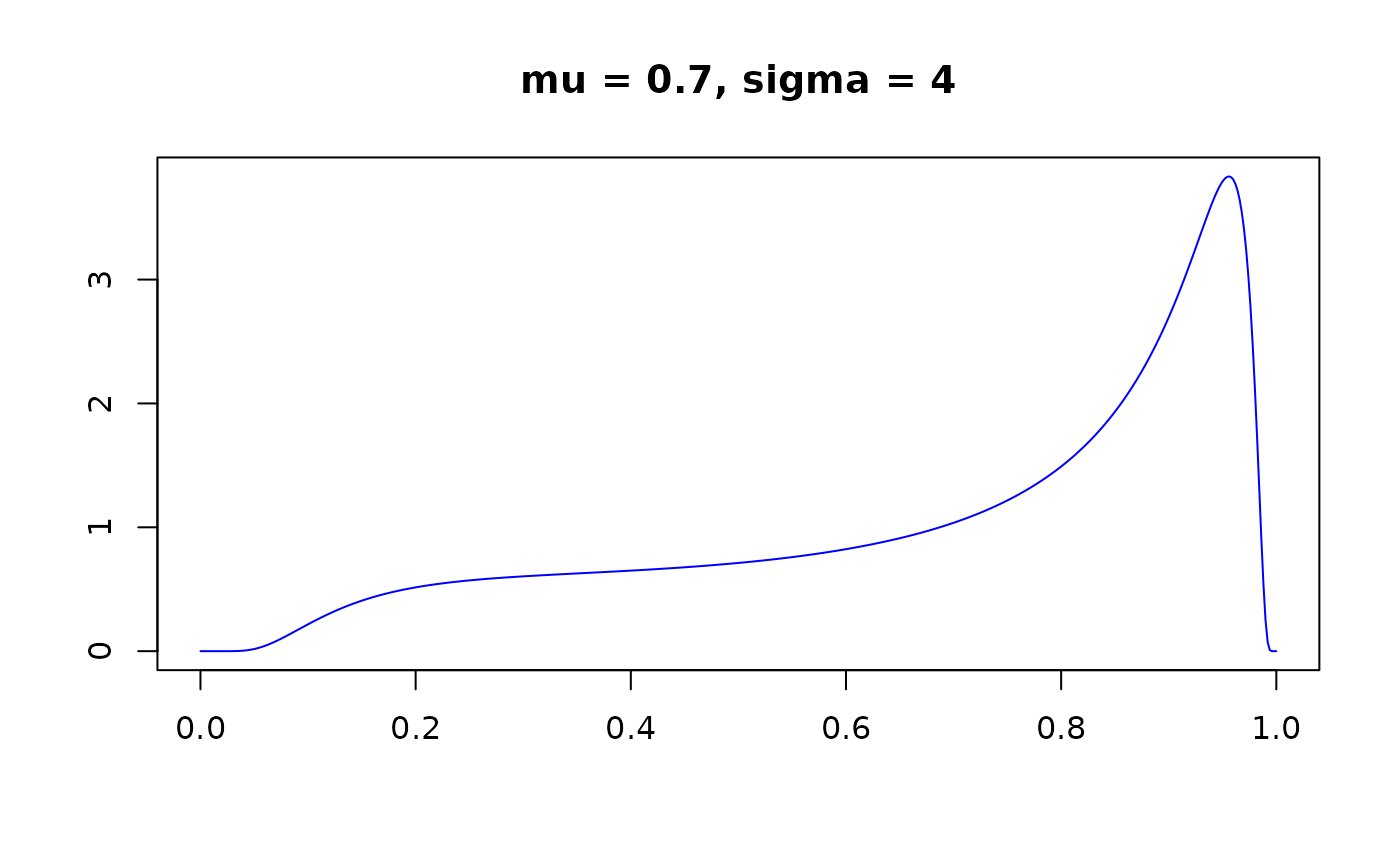
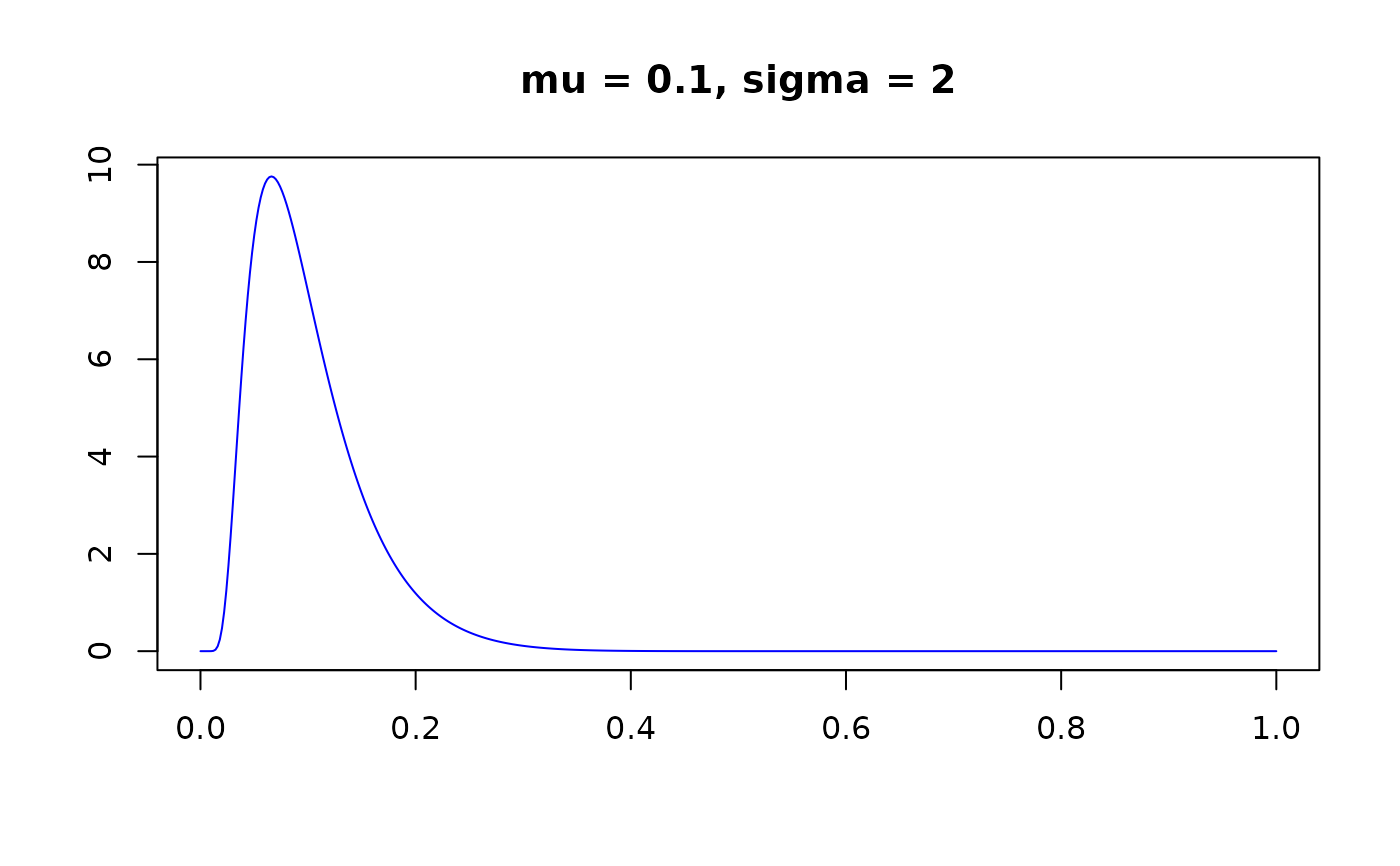
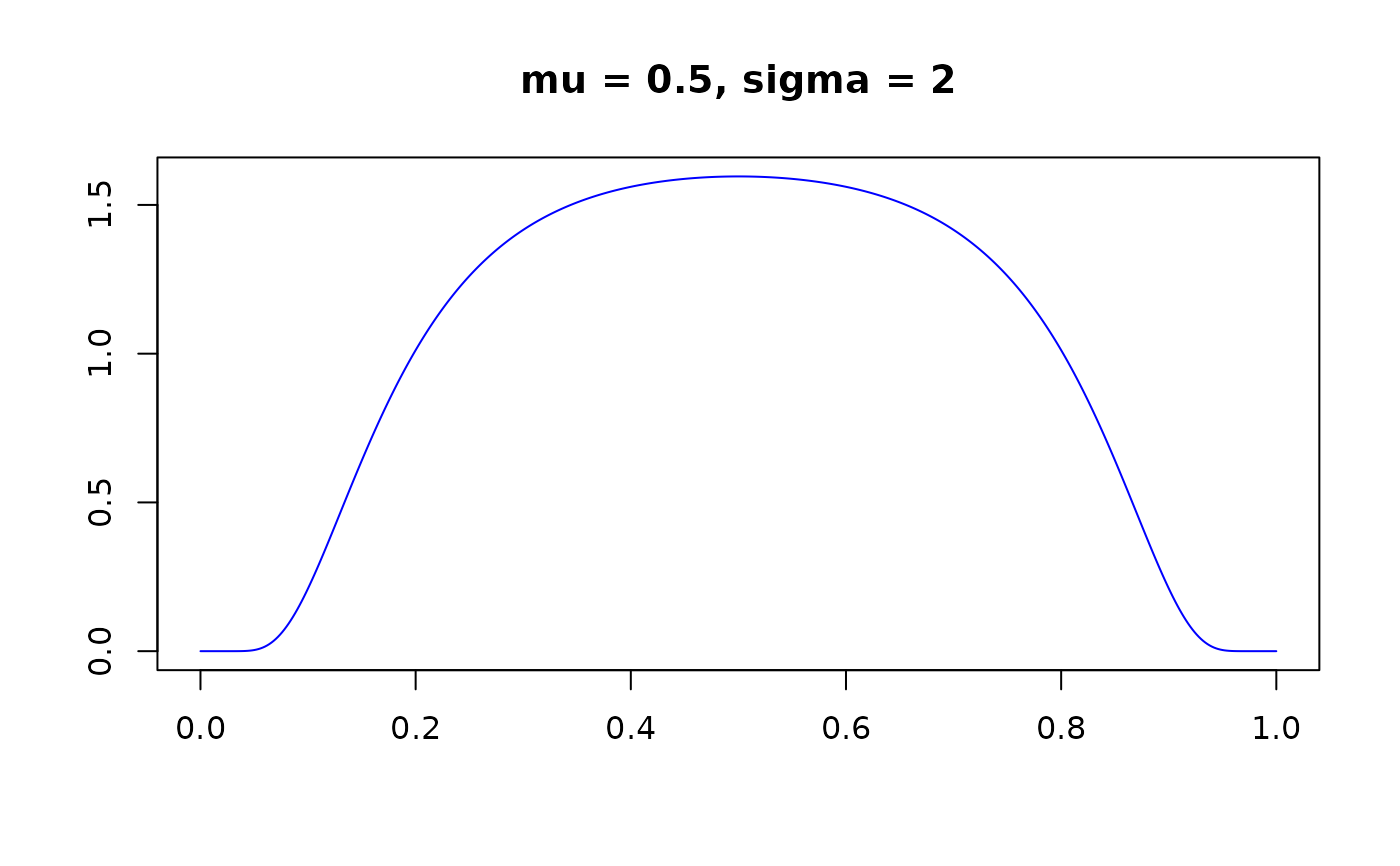
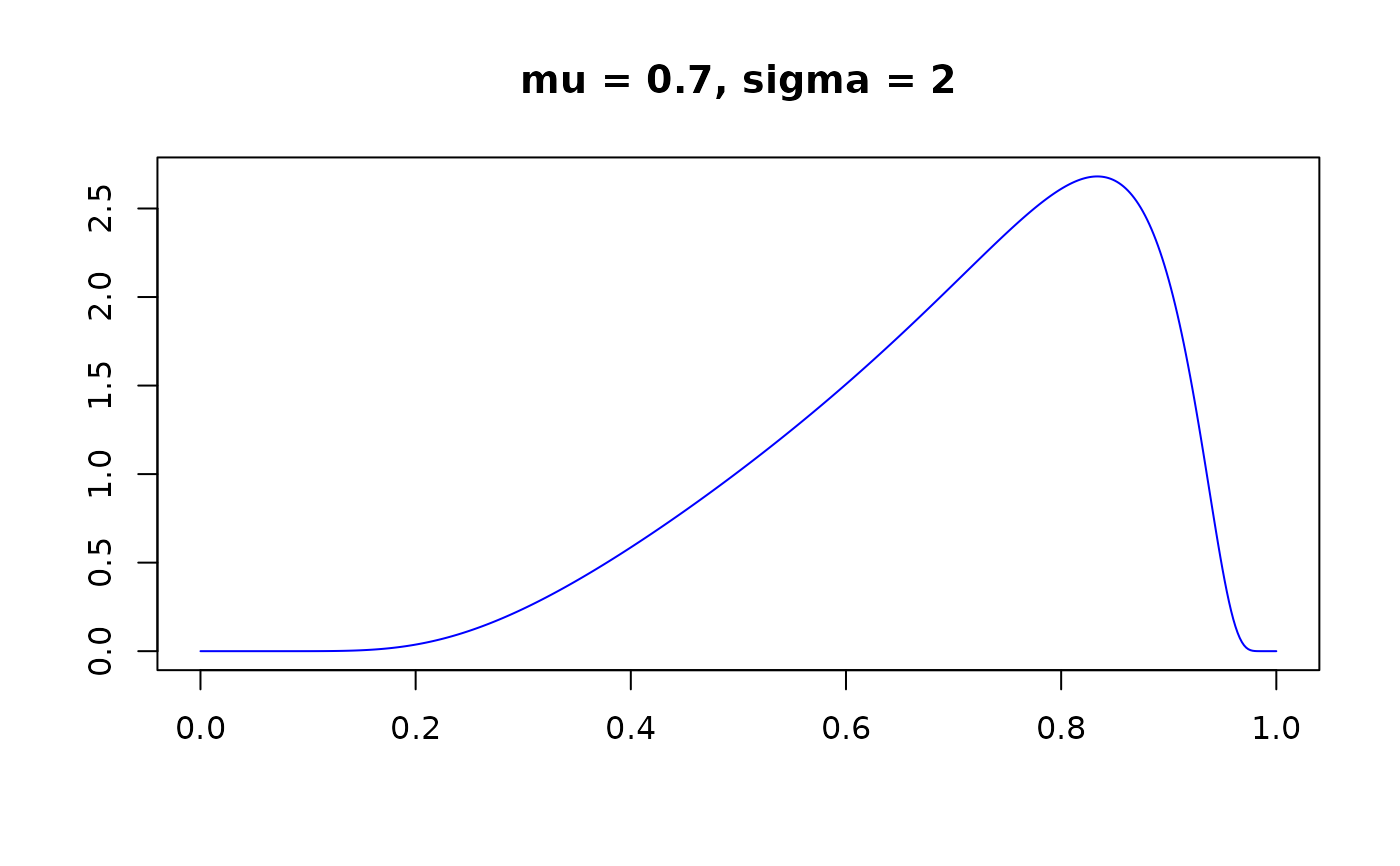
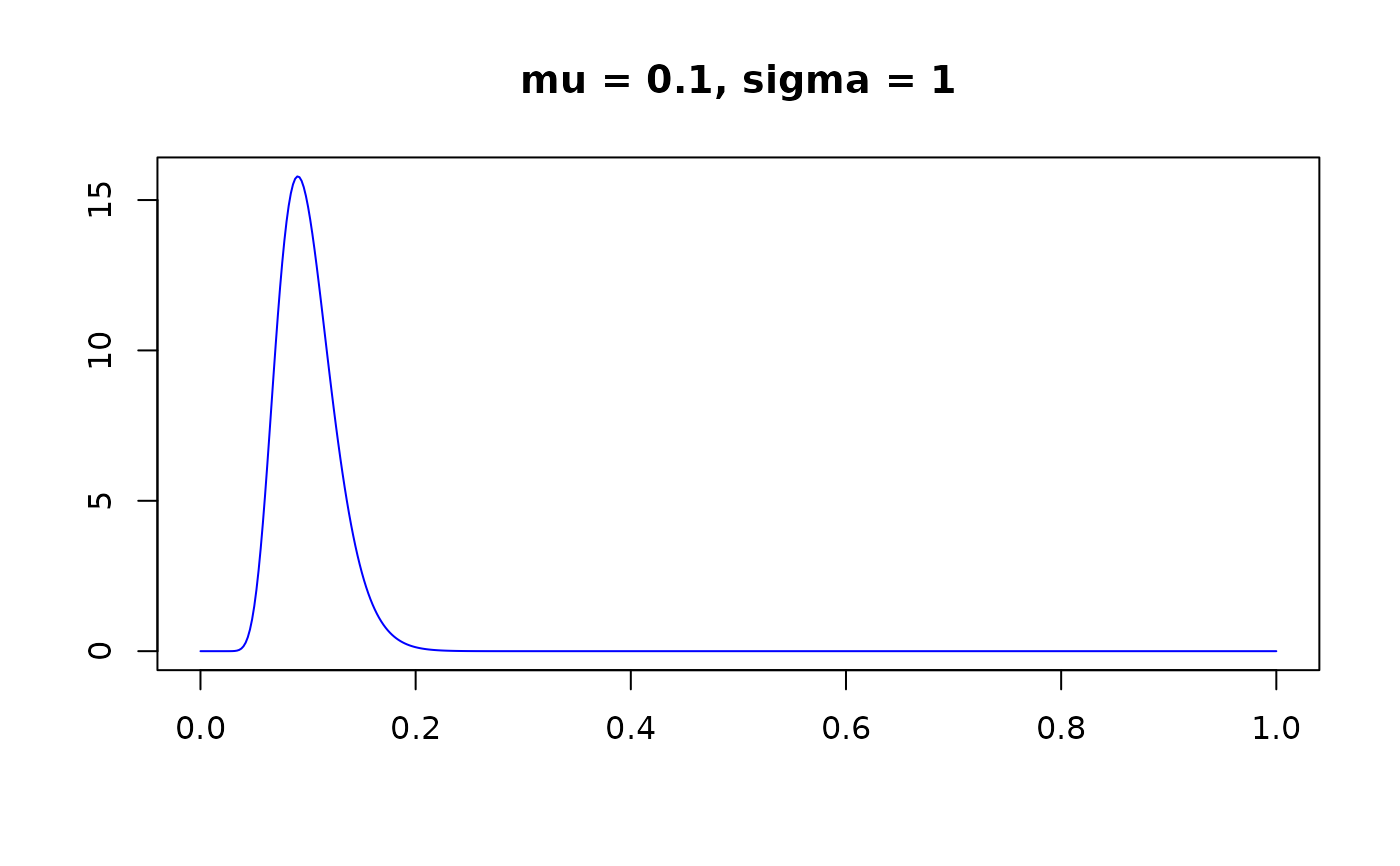
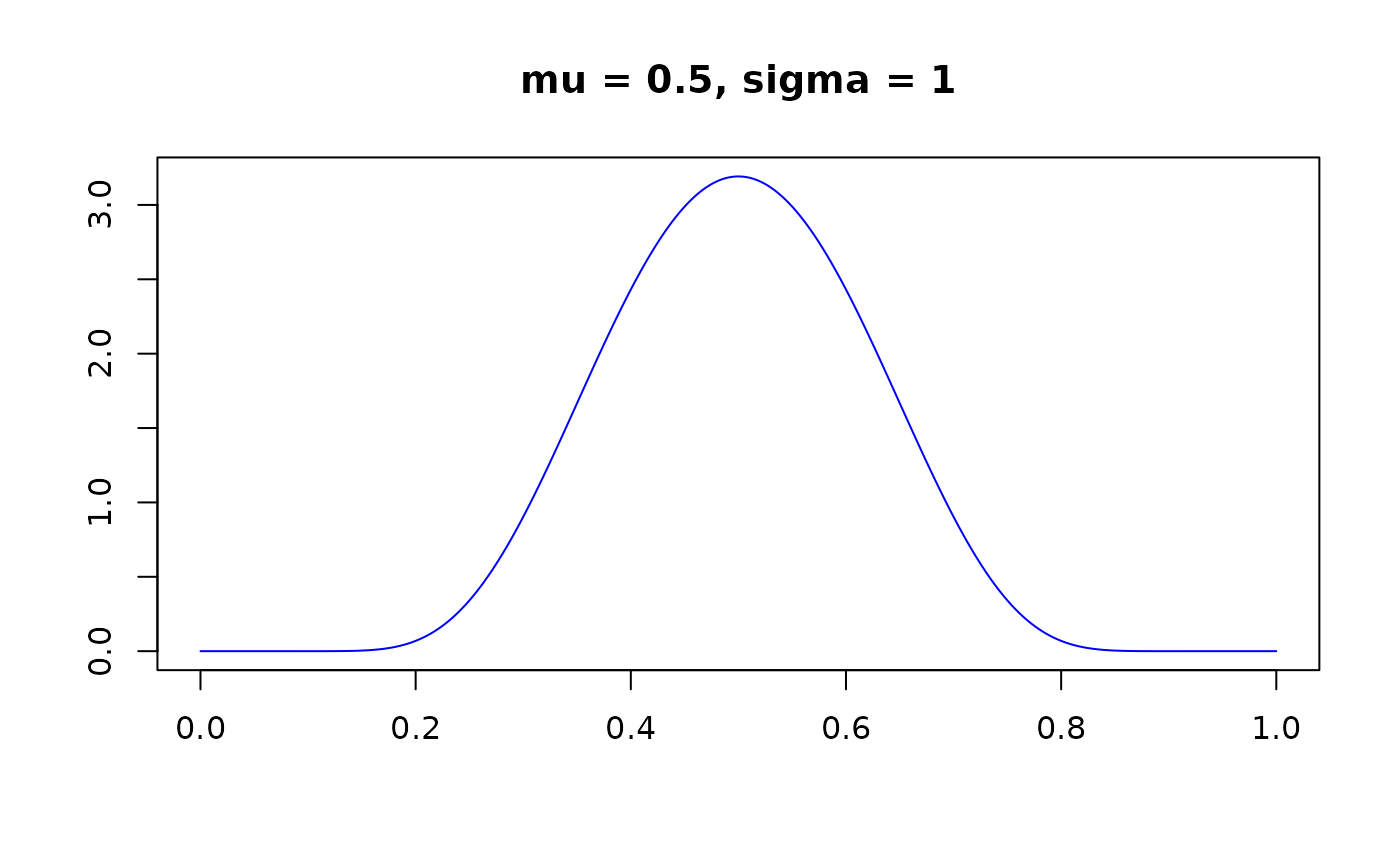
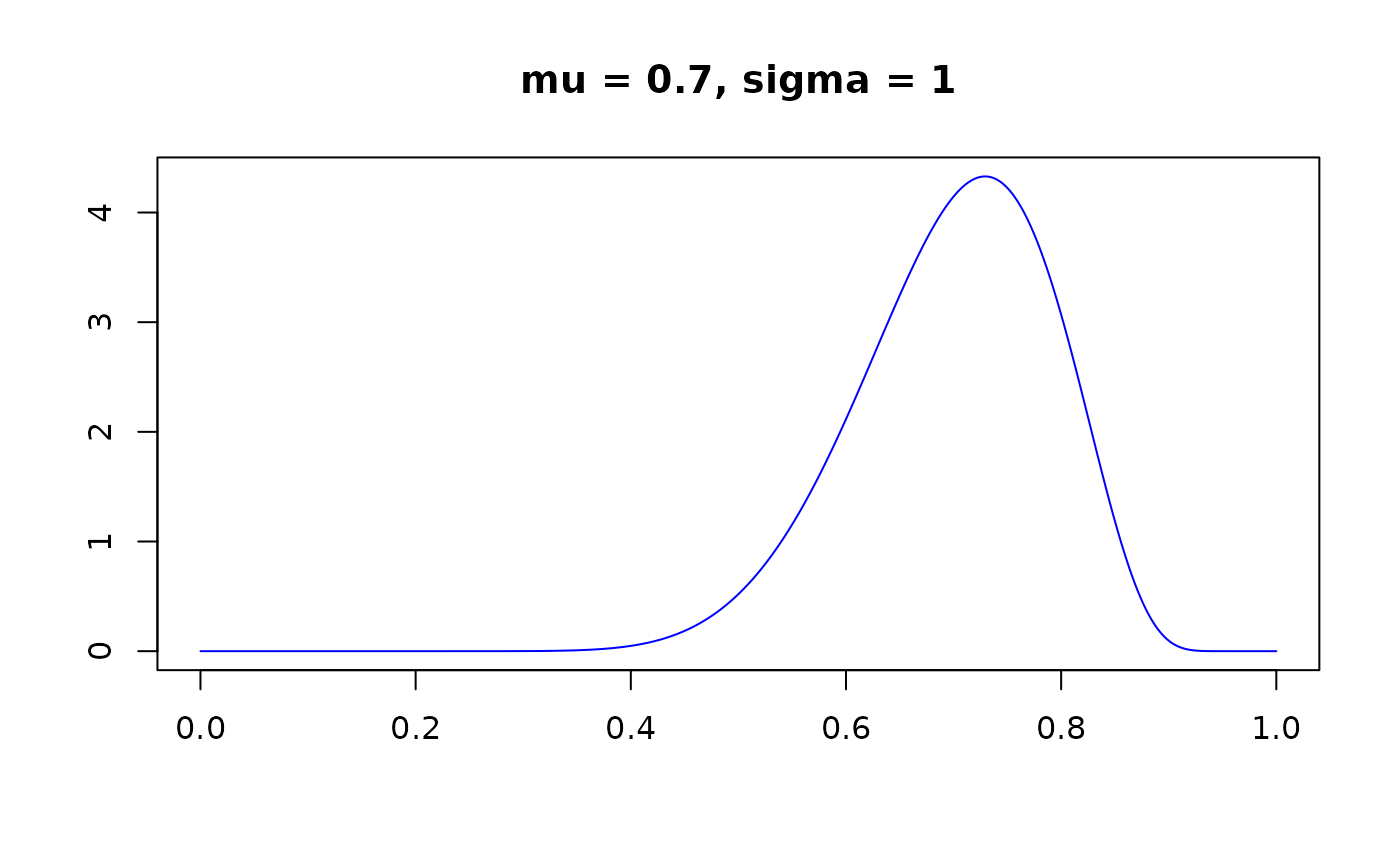
sigma <- c(4, 2, 1)  # Dispersion parameter
mymu  <- c(0.1, 0.5, 0.7); xxx <- seq(0, 1, len = 501)
if (FALSE)  par(mfrow = c(3, 3))  # Figure 2.1 of Song (2007)
for (iii in 1:3)
  for (jjj in 1:3) {
    plot(xxx, dsimplex(xxx, mymu[jjj], sigma[iii]),
         type = "l", col = "blue", xlab = "", ylab = "", main =
         paste("mu = ", mymu[jjj], ", sigma = ", sigma[iii], sep = "")) }  # \dontrun{}