bestMatch
bestMatch.RdDetermine for each grid cell which reference it is most similar to. A reference consists of a SpatVector with reference locations, or a data.frame or matrix in which each column matches a layer name in the SpatRaster.
Similarity is computed with the mean absolute or the mean squared differences between the cell and the reference, or with an alternative function you provide. It may be important to first scale the input.
# S4 method for class 'SpatRaster,SpatVector'
bestMatch(x, y, labels=NULL, fun="squared", ...,
    filename="", overwrite=FALSE, wopt=list())

# S4 method for class 'SpatRaster,data.frame'
bestMatch(x, y, labels=NULL, fun="squared", ...,
    filename="", overwrite=FALSE, wopt=list())

# S4 method for class 'SpatRaster,matrix'
bestMatch(x, y, labels=NULL, fun="squared", ...,
    filename="", overwrite=FALSE, wopt=list())
Arguments
- x
SpatRaster
- y
SpatVector, data.frame or matrix
- labels
character. labels that correspond to each class (row in
y- fun
character. One of "abs" for the mean absolute difference, or "squared" for the mean squared difference. Or a true function like terra:::match_sqr
- ...
additional arguments passed to
fun. For the built-in functions this can bena.rm=TRUE- filename
character. Output filename
- overwrite
logical. If
TRUE,filenameis overwritten- wopt
additional arguments for writing files as in
writeRaster
Value
SpatRaster
Examples
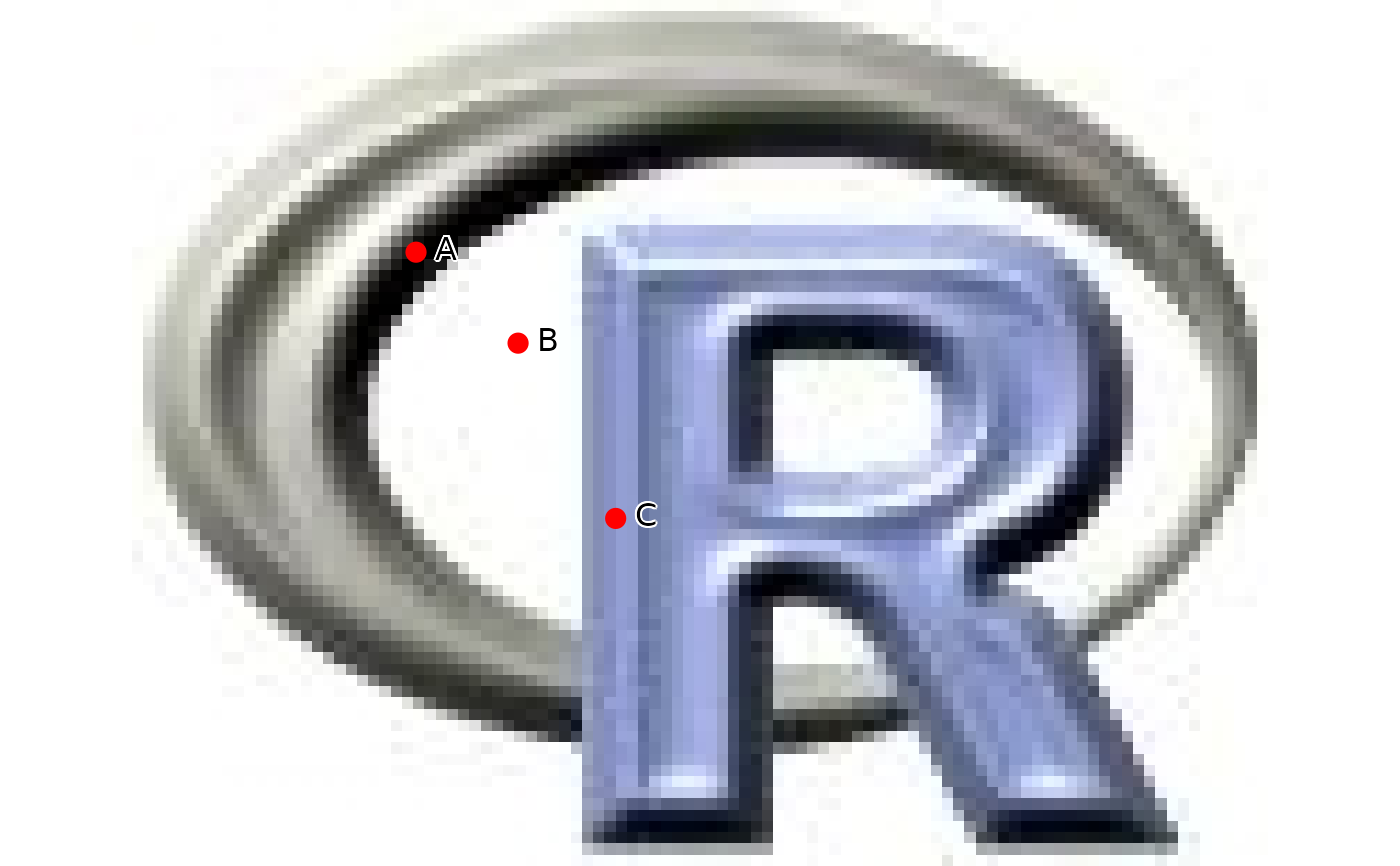
f <- system.file("ex/logo.tif", package = "terra")
r <- rast(f)
# locations of interest
pts <- vect(cbind(c(25.25, 34.324, 43.003), c(54.577, 46.489, 30.905)))
pts$code <- LETTERS[1:3]
plot(r)
points(pts, pch=20, cex=2, col="red")
text(pts, "code", pos=4, halo=TRUE)
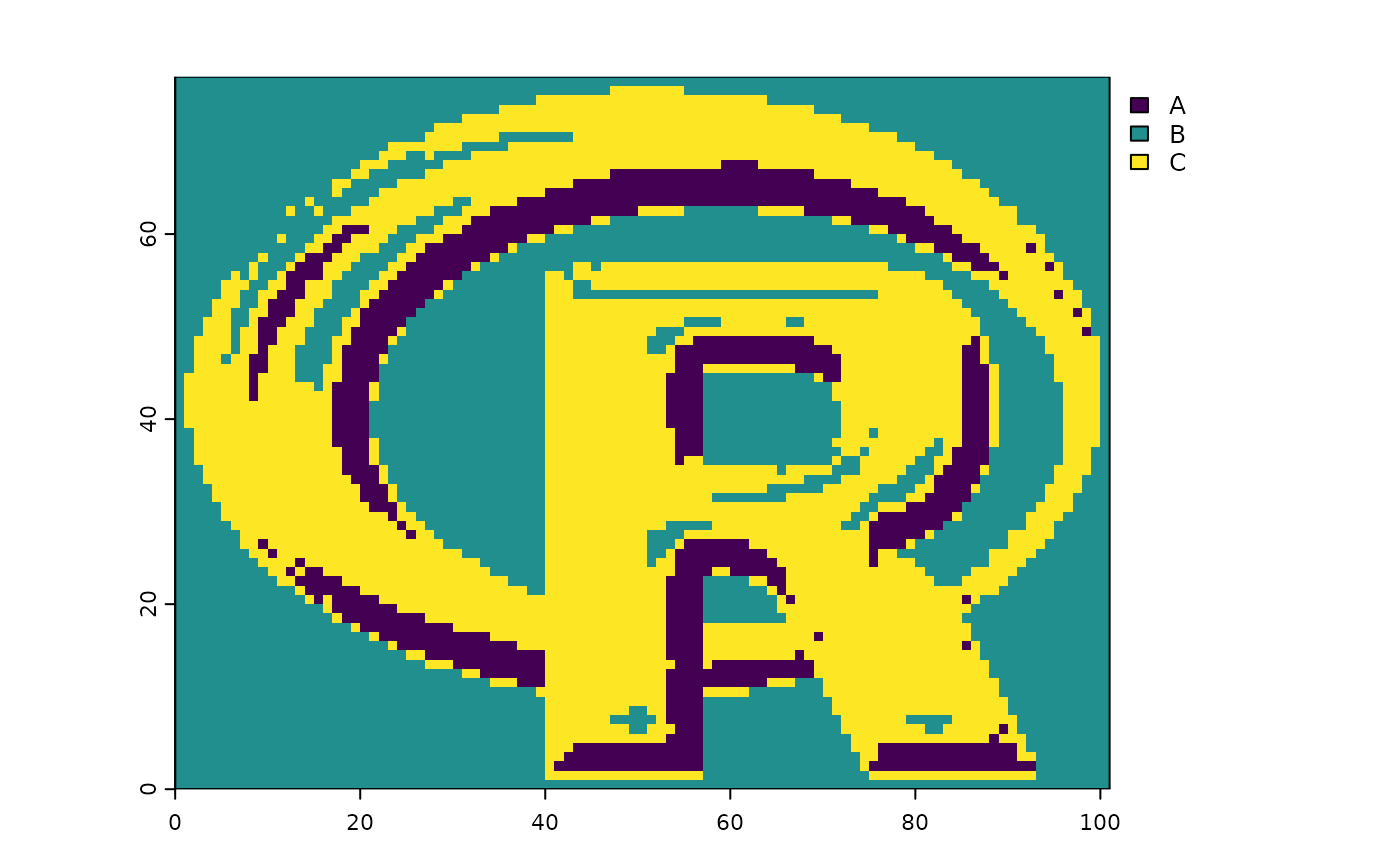
 x <- scale(r)
s1 <- bestMatch(x, pts, labels=pts$code)
plot(s1)
x <- scale(r)
s1 <- bestMatch(x, pts, labels=pts$code)
plot(s1)
 # same result
e <- extract(x, pts, ID=FALSE)
s2 <- bestMatch(x, e, labels=c("Ap", "Nt", "Ms"))
# same result
e <- extract(x, pts, ID=FALSE)
s2 <- bestMatch(x, e, labels=c("Ap", "Nt", "Ms"))